


The Indian Patent Office is the government authority responsible for administering patent laws and granting patents in India. It operates under the Department for Promotion of Industry and Internal Trade (DPIIT), Ministry of Commerce and Industry. The office plays a crucial role in encouraging innovation, protecting intellectual property rights, and promoting technological advancement across various industries.
Inventors, researchers, startups, and businesses rely on the Indian Patent Office to secure exclusive rights over their inventions. A patent provides legal protection that prevents unauthorized use, manufacturing, or sale of an invention for a specified period. As India continues to emerge as a global innovation hub, the importance of patent protection has increased significantly.
The Indian Patent Office also ensures that patent applications comply with legal requirements before granting protection. Applicants often consult an attorney to navigate the complex filing procedures and improve the chances of successful registration. Understanding the role and functions of this institution is essential for anyone seeking intellectual property protection in India.
History and Evolution of the Indian Patent Office
The history of patent law in India dates back to the colonial era. The first patent legislation was introduced in 1856 to encourage inventors and promote industrial development. Over time, several amendments were made to align patent regulations with changing economic and technological environments.
The modern framework is governed by the Patents Act, 1970, which was substantially amended in 1999, 2002, and 2005 to comply with international obligations under the World Trade Organization’s TRIPS Agreement. These reforms strengthened intellectual property protection while maintaining a balance between innovation and public interest.
The Indian Patent Office evolved from a traditional paper-based institution into a technologically advanced organization that supports online filing and digital examination processes. Today, inventors can file applications electronically and monitor their status online. Many applicants hire an experienced attorney to ensure compliance with legal requirements during the filing process.
Structure of the Indian Patent Office
The Indian Patent Office has several branches located across the country. Each branch handles patent applications based on territorial jurisdiction and workload distribution.
| Office Location | Primary Function |
|---|---|
| Kolkata | Headquarters and administrative functions |
| Mumbai | Patent examination and processing |
| Chennai | Patent applications and examinations |
| Delhi | Patent registration and legal matters |
These offices work together to ensure efficient processing of patent applications. The Controller General of Patents, Designs, and Trade Marks supervises the overall functioning of the organization.
The office employs patent examiners, controllers, legal professionals, and technical experts who assess applications. Inventors frequently seek guidance from an attorney before submitting applications to avoid procedural errors and legal complications.
Objectives of the Indian Patent Office
The Indian Patent Office operates with several key objectives aimed at fostering innovation and protecting intellectual property rights.
Some major objectives include:
- Encouraging scientific and technological innovation.
- Protecting inventors’ rights.
- Promoting industrial growth.
- Supporting research and development.
- Maintaining a transparent patent system.
- Facilitating public access to patent information.
By achieving these goals, the office contributes significantly to India’s economic development. Patent protection motivates inventors to invest time and resources in developing new technologies. In many cases, an attorney assists innovators in understanding how patent rights can support their commercial objectives.
Types of Patent Applications in India
The Indian Patent Office accepts different types of patent applications depending on the applicant’s circumstances and requirements.
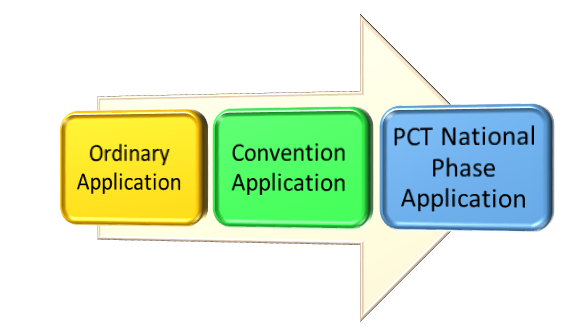
Ordinary Application
An ordinary application is filed without claiming priority from another application.
Convention Application
This application claims priority from a corresponding application filed in a convention country.
PCT International Application
Applications filed under the Patent Cooperation Treaty allow inventors to seek protection in multiple countries.
PCT National Phase Application
This application enters the Indian phase after an international PCT filing.
Patent of Addition
Filed for improvements or modifications to an existing patented invention.
Applicants often consult an attorney to determine the most suitable application category for their invention and business strategy.
Patent Filing Process in India
The patent registration process involves several stages that ensure only eligible inventions receive protection.
Step 1: Patent Search
A patent search helps determine whether the invention is novel and not previously disclosed.
Step 2: Drafting the Application
A detailed specification describing the invention is prepared.
Step 3: Filing the Application
The application is submitted electronically or physically to the Indian Patent Office.
Step 4: Publication
The application is generally published after 18 months from the filing date.
Step 5: Request for Examination
The applicant must request examination within the prescribed period.
Step 6: Examination Report
Patent examiners review the application and issue an examination report.
Step 7: Response to Objections
Applicants address any objections raised during examination.
Step 8: Grant of Patent
If all requirements are satisfied, the patent is granted.
Throughout this process, an experienced attorney can help applicants respond effectively to examination reports and improve the likelihood of approval.
Criteria for Patentability
Not every invention qualifies for patent protection. The Indian Patent Office evaluates applications based on specific legal requirements.
| Patentability Requirement | Description |
|---|---|
| Novelty | The invention must be new |
| Inventive Step | Must not be obvious to experts |
| Industrial Applicability | Must be capable of practical use |
The invention should not fall within categories excluded from patentability under Indian law. Examiners carefully assess each application against these standards before granting rights.
Professional assistance from an attorney is often valuable when demonstrating compliance with patentability requirements and addressing examiner concerns.
Role of Patent Examiners
Patent examiners play a critical role in maintaining the integrity of the patent system. They analyze applications to determine whether inventions meet statutory requirements.

Their responsibilities include:
- Conducting prior art searches.
- Reviewing technical specifications.
- Examining legal compliance.
- Issuing examination reports.
- Recommending patent grants or refusals.
Examiners possess expertise in various scientific and technical disciplines, allowing them to evaluate complex inventions accurately. Applicants and their attorney representatives frequently communicate with examiners during the prosecution process.
Benefits of Registering a Patent
Obtaining a patent offers numerous advantages to inventors and businesses.
Key benefits include:
- Exclusive rights over the invention.
- Competitive market advantage.
- Enhanced business valuation.
- Licensing opportunities.
- Revenue generation through royalties.
- Legal protection against infringement.
Patents encourage innovation by rewarding inventors for their creativity and investment. Businesses often view patent portfolios as valuable assets that attract investors and strategic partners.
An attorney can help maximize these benefits by ensuring comprehensive protection and effective enforcement of patent rights.
Challenges Faced by Applicants
Although the Indian Patent Office has modernized its processes, applicants may still encounter challenges during patent registration.
Common issues include:
- Technical drafting errors.
- Delays in examination.
- Objections from examiners.
- Insufficient disclosure.
- Patentability disputes.
- Opposition proceedings.
Proper preparation and professional guidance can reduce these challenges. Many inventors engage an attorney early in the process to identify potential obstacles and develop effective strategies for overcoming them.
Digital Transformation of the Indian Patent Office
The Indian Patent Office has embraced digital technologies to improve efficiency and accessibility. Online filing systems allow applicants to submit documents electronically from anywhere in the country.
Digital initiatives include:
- Electronic filing portals.
- Online fee payment systems.
- Digital examination records.
- Public patent databases.
- Automated communication systems.
These advancements have streamlined application processing and reduced administrative burdens. Inventors can track application status in real time and access patent information conveniently.
The availability of digital services also enables an attorney to manage patent portfolios more efficiently and provide faster assistance to clients.
International Cooperation and Global Impact
The Indian Patent Office actively participates in international intellectual property initiatives. Cooperation with global organizations helps harmonize patent procedures and improve examination standards.
Important areas of international engagement include:
- Patent Cooperation Treaty participation.
- Collaboration with foreign patent offices.
- Knowledge-sharing programs.
- Capacity-building initiatives.
- International patent classification systems.
These efforts strengthen India’s position in the global innovation ecosystem and support inventors seeking international patent protection.
As businesses increasingly operate across borders, coordination between patent offices becomes essential. An attorney with international experience can assist applicants in navigating both domestic and foreign patent systems.
Future of the Indian Patent Office
India’s innovation landscape is expanding rapidly due to growth in technology, biotechnology, pharmaceuticals, artificial intelligence, and renewable energy sectors. The Indian Patent Office is expected to play an even more significant role in supporting these developments.
Future priorities may include:
- Faster examination timelines.
- Greater use of artificial intelligence.
- Enhanced digital infrastructure.
- Improved transparency.
- Increased examiner capacity.
- Stronger international collaboration.
These developments will help create a more efficient and inventor-friendly patent system while maintaining rigorous examination standards.
Conclusion
The Indian Patent Office serves as the cornerstone of intellectual property protection in India. By administering patent laws, examining applications, and granting exclusive rights to inventors, it encourages innovation and economic growth. The office has evolved significantly through legislative reforms and digital transformation, making patent registration more accessible and efficient.
Read more: Attorney General of India