
.)
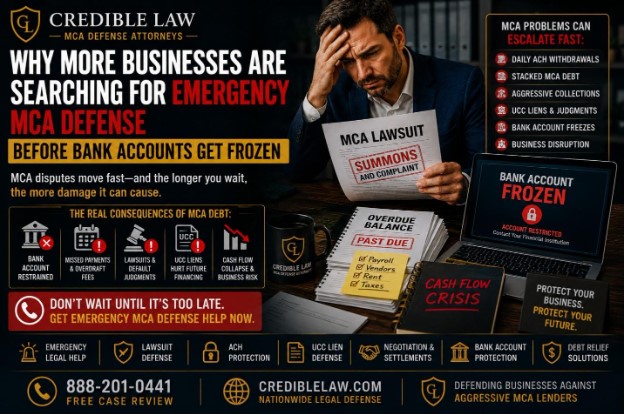
Across the United States, small businesses are increasingly facing severe financial pressure tied to merchant cash advances (MCAs). What initially begins as a short-term working capital solution can quickly escalate into aggressive collections, daily ACH withdrawals, lawsuits, UCC liens, and in some cases, frozen operating accounts.
For many business owners, the situation becomes critical when:
- payroll begins failing,
- vendors stop shipments,
- financing applications are denied,
- or operating accounts become unstable due to constant withdrawal activity.
As MCA litigation and collections continue rising nationwide, more companies are searching for emergency legal guidance before operational damage becomes irreversible.
Why MCA Disputes Are Becoming More Aggressive
Merchant cash advances became popular because they offered:
- fast approvals,
- minimal underwriting,
- rapid funding timelines,
- and financing access for businesses unable to qualify for traditional bank loans.
However, many MCA agreements contain aggressive repayment structures involving:
- daily ACH withdrawals,
- fixed remittances,
- broad default provisions,
- personal guarantees,
- and UCC filings.
When revenues decline or businesses become overleveraged through stacked funding positions, collection activity may escalate quickly.
Businesses nationwide are increasingly reporting:
- account overdrafts,
- aggressive collection calls,
- arbitration demands,
- lawsuits,
- and emergency financial instability tied to MCA obligations.
The Danger of Waiting Too Long
One of the biggest mistakes business owners make is waiting until:
- accounts are frozen,
- lawsuits are filed,
- or default judgments are entered
before seeking help.
Many owners initially believe:
- revenues will improve,
- another funding source will stabilize operations,
- or lenders will continue negotiating informally.
Unfortunately, MCA disputes often escalate much faster than expected.
Once payments become inconsistent or ACH withdrawals fail repeatedly, businesses may suddenly face:
- intensified collection efforts,
- lender lawsuits,
- bank restraints,
- or severe operational disruption.
Companies facing these situations often begin researching emergency resources related to Merchant Cash Advance Emergency Help while trying to preserve operating cash flow before collections intensify further.
How MCA Stacking Creates Financial Instability
One of the most common drivers of MCA distress involves stacking.
Businesses frequently obtain additional advances in order to:
- maintain payroll,
- cover tax obligations,
- purchase inventory,
- satisfy prior MCA payments,
- or stabilize short-term cash flow.
Initially, the incoming capital may temporarily relieve pressure.
But over time, stacked positions often create:
- overlapping ACH withdrawals,
- escalating repayment obligations,
- cash flow collapse,
- and increased litigation exposure.
Businesses carrying multiple active MCA positions may eventually find themselves operating primarily to satisfy lender withdrawals instead of sustaining healthy business operations.
At that stage, operational flexibility often disappears rapidly.
Why Frozen Accounts Become Business Emergencies
For most small businesses, uninterrupted access to operating accounts is essential.
When MCA collection disputes escalate into:
- bank restraints,
- frozen accounts,
- or receivables disruption,
the consequences can become immediate and severe.
Businesses may suddenly struggle with:
- payroll failures,
- vendor disruptions,
- returned payments,
- customer service breakdowns,
- and mounting financial instability.
Even short-term account interruptions can create long-term operational damage if not addressed quickly.
This is one reason many businesses seek emergency guidance before collections escalate into full operational paralysis.
The Impact of UCC Liens on Future Financing
Many MCA companies file UCC financing statements shortly after funding.
These filings may significantly affect:
- SBA loan eligibility,
- refinancing opportunities,
- equipment financing,
- inventory lending,
- and traditional banking relationships.
Businesses often discover the seriousness of these filings only after:
- financing applications are denied,
- lenders demand lien releases,
- or underwriting reviews identify stacked MCA exposure.
Multiple active UCC filings combined with aggressive repayment structures can substantially impair a business’s ability to obtain stable long-term financing.
MCA Lawsuits Are Increasing Nationwide
As repayment pressure intensifies, MCA litigation continues expanding across multiple industries.
Businesses in:
- trucking,
- retail,
- hospitality,
- eCommerce,
- healthcare,
- construction,
- and professional services
are increasingly facing lawsuits tied to:
- missed ACH withdrawals,
- alleged defaults,
- reconciliation disputes,
- and stacked funding obligations.
Many businesses underestimate how quickly these lawsuits can progress once formal collection activity begins.
Companies that fail to respond promptly may eventually face:
- default judgments,
- account restraints,
- expanded collections,
- and severe financial disruption.
Businesses dealing with active legal pressure frequently seek guidance from experienced MCA Lawsuit Defense Attorneys to review agreements, evaluate operational exposure, and assess possible defense or restructuring strategies.
Why Reconciliation Rights Matter
Many MCA agreements include reconciliation provisions intended to adjust payment amounts based on actual receivables performance.
However, disputes frequently arise regarding:
- whether reconciliation requests were honored,
- how remittances were calculated,
- or whether ACH withdrawals reflected actual business revenue declines.
Businesses facing financial distress often report continued aggressive withdrawals despite reconciliation language that appears intended to provide flexibility.
Understanding these provisions may become extremely important when evaluating:
- operational exposure,
- litigation risk,
- and overall agreement enforceability.
Why Businesses Should Review Agreements Early
Not all MCA agreements function the same way.
Some agreements contain:
- aggressive default triggers,
- sweeping UCC rights,
- broad collection remedies,
- fixed repayment structures,
- or highly restrictive ACH authorization language.
Businesses should carefully evaluate:
- repayment mechanics,
- reconciliation clauses,
- default definitions,
- lien exposure,
- and collection provisions
before operational problems escalate further.
The earlier businesses understand the structure and risks associated with their agreements, the more flexibility they may preserve moving forward.
The Emotional Pressure on Business Owners
The stress associated with MCA collections often affects far more than business finances alone.
Owners frequently report:
- chronic anxiety,
- inability to sleep,
- fear of losing the company,
- strained personal relationships,
- and uncertainty regarding long-term survival.
Many entrepreneurs who spent years building successful businesses suddenly find themselves overwhelmed by aggressive repayment structures and escalating collection pressure.
This emotional strain can sometimes lead businesses into rushed financial decisions that deepen the situation further.
Final Thoughts
Merchant cash advance disputes are becoming increasingly aggressive nationwide as businesses struggle with stacked funding positions, daily ACH withdrawals, lawsuits, UCC liens, and mounting operational instability.
For many companies, the most dangerous mistake is waiting too long before evaluating available options.
What begins as short-term working capital can quickly evolve into:
- frozen accounts,
- litigation,
- financing denials,
- and severe operational disruption.
Businesses facing MCA-related financial pressure should understand that early evaluation of agreements, repayment obligations, collection exposure, and operational risks may significantly affect long-term recovery opportunities and business survival.